
CSAM gears up to support sustainable agricultural mechanization in the Asia-Pacific through Digital Roadmap and leveraging coordination among ESCAP Regional Institutions
The Centre for Sustainable Agricultural Mechanization (CSAM) of the United Nations Economic and Social Commission for Asia and the Pacific (ESCAP) is advancing the development of its own roadmap on digital technologies and AI to support more sustainable, resilient and inclusive agricultural mechanization across the Asia-Pacific region.
The initiative reflects growing recognition that digital technologies are reshaping agricultural systems, creating new opportunities to improve productivity, strengthen climate resilience and support evidence-based decision-making. The roadmap seeks to provide a framework for promoting policy dialogue, knowledge-sharing, technological cooperation, capacity-building and technology transfer among countries in the region.
As part of the roadmap development process, CSAM has been engaging with a range of stakeholders and partners. On 27 October, the initiative was also presented and discussed during the twenty-second session of the Governing Council of the Centre, where member States considered emerging trends in agricultural digitalization and the implications of AI for the future of mechanization in the region. Discussions underscored the need to ensure that technological innovation remains accessible, affordable and responsive to diverse national circumstances.
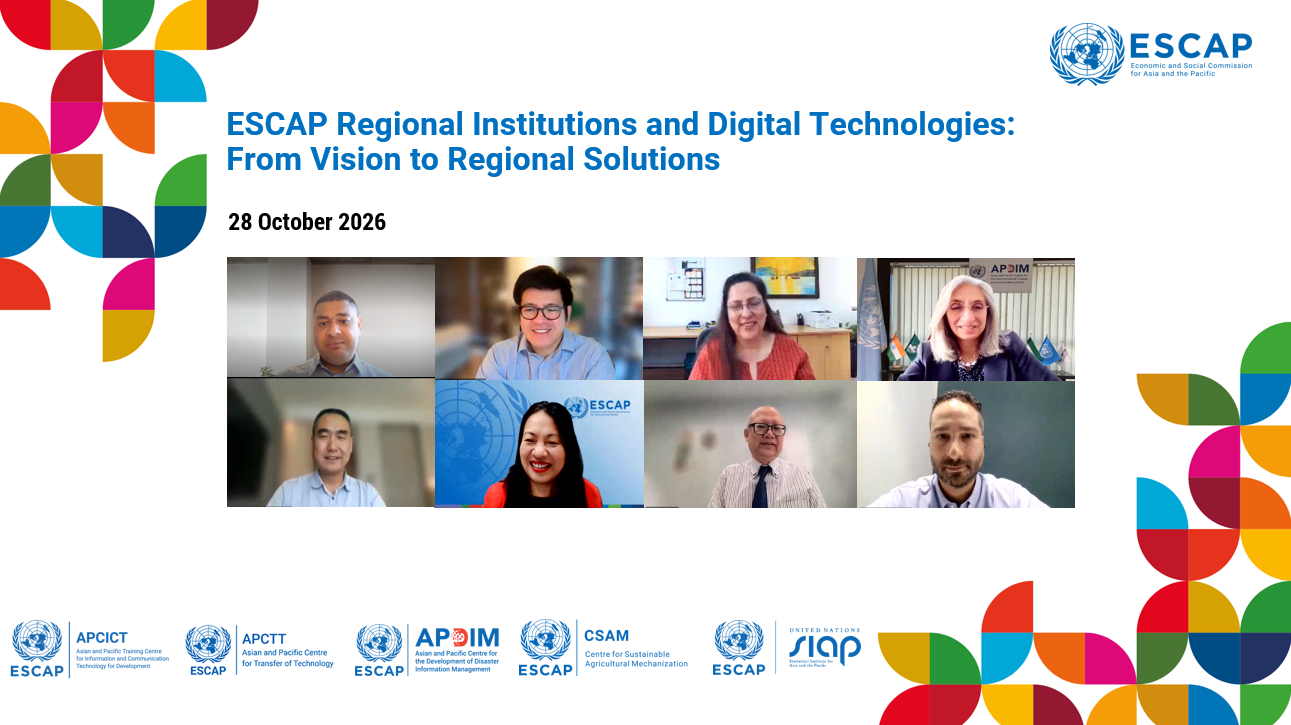
On 28 October CSAM convened an online discussion with the other ESCAP Regional Institutions, whose Heads and representatives discussed how digital technologies and AI are increasingly becoming integral to their respective mandates, from capacity development and innovation ecosystems to disaster resilience, official statistics and sustainable agricultural development. The discussion benefitted from inputs from ESCAP’s ICT and Disaster Risk Reduction Division and Statistics Division, and highlighted opportunities for greater collaboration in areas such as data governance, capacity development, pilot initiatives and knowledge-sharing. CSAM presented its vision for AI-enabled agricultural mechanization and digital agriculture, emphasizing the importance of regional cooperation, standards development and practical applications that address member States' needs.
According to the roadmap under development, advances in AI, robotics, big data and intelligent machinery have the potential to transform agricultural production systems, farm management practices and mechanization governance. Proposed areas of work include the development of regional knowledge platforms, testing and evaluation frameworks for emerging technologies, capacity-building programmes, demonstration activities and enhanced regional cooperation on digital innovation in agriculture. The roadmap also highlights the importance of addressing issues related to data governance, standards, inclusiveness and digital readiness.
The initiative builds on CSAM's broader efforts to promote innovation and technology transfer for sustainable agricultural development and reflects increasing interest among member States in practical approaches to harnessing digital technologies for food security, rural development and climate resilience. CSAM will continue consultations with member States, technical experts and development partners as it refines the roadmap and identifies opportunities for collaborative implementation across the region.