
CSAM Study Tour Promotes Climate-Smart Mechanization and Sustainable Crop Residue Management in Asia and the Pacific
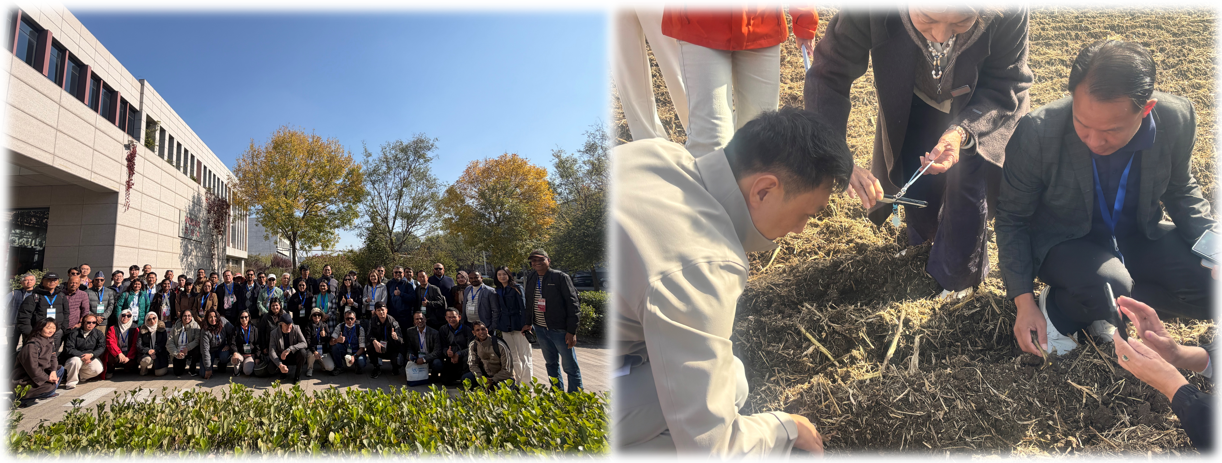
From 26 to 31 October 2026, the Centre for Sustainable Agricultural Mechanization (CSAM) of the United Nations Economic and Social Commission for Asia and the Pacific (ESCAP) organized a Study Tour on Innovative and Suitable Integrated Straw Management Technologies and Practices in Tianjin, Luoyang, Zhengzhou and Xuchang, China. The Study Tour was organized as part of the project titled “Strengthening Mechanization-based Solutions for Climate-smart Crop Residue Management in Cambodia, Indonesia and Nepal,” funded by the United Nations Peace and Development Fund (UNPDF) 2030 Agenda Sub-Fund, and with the support of the China Agricultural Machinery Distribution Association (CAMDA), the China Agricultural Mechanization Association (CAMA), the China Association of Agricultural Machinery Manufacturers (CAAMM), and China Agricultural University, alongside the 2026 China International Agricultural Machinery Exhibition (CIAME).
The Study Tour involved over 20 representatives from government institutions, academia, farmers’ associations, and agricultural machinery associations from the project countries and other countries involved in CSAM’s Regional Initiative on Integrated Straw Management, namely Lao PDR and Thailand. The visit to areas with a well-developed agricultural machinery industry was an opportunity to review and learn from innovative and suitable integrated straw management technologies and practices.
In order to exchange knowledge, experiences, and good practices in sustainable agricultural mechanization, the participants also visited the 2026 China International Agricultural Machinery Exhibition (CIAME) in Tianjin where they joined the “Regional Workshop on Strengthening Mechanization-based Solutions for Climate-smart Crop Residue Management.” The workshop aimed at advancing climate-smart mechanization solutions for sustainable crop residue management, strengthening regional cooperation, and promoting more resilient, inclusive, and sustainable agrifood systems. Sessions highlighted national priorities and policy instruments for sustainable agricultural mechanization, with particular attention to addressing environmental and agricultural challenges associated with crop residue burning. A dedicated session on inclusive mechanization also explored opportunities to expand equitable access to agricultural machinery and services, particularly for smallholder farmers, women, and other underserved communities.
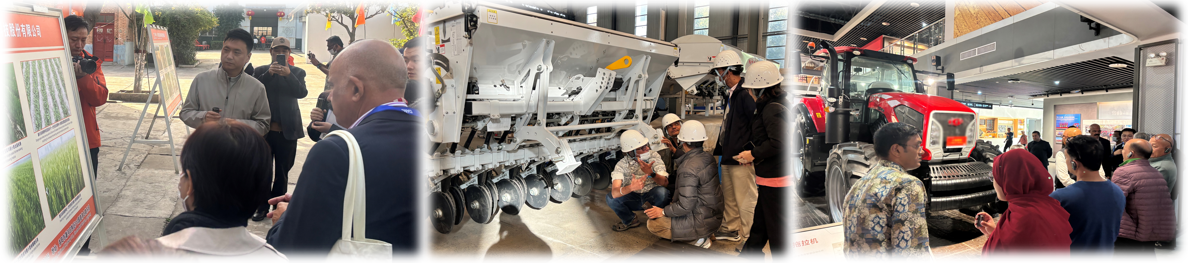
Further visits to agricultural machinery manufacturers in Tianjin, Luoyang, Zhengzhou, and Xuchang provided insights into a range of agricultural machinery and innovative technologies, including equipment for crop residue management, conservation agriculture, and other climate-smart agricultural practices. Through on-site demonstrations and exchanges with manufacturers, participants gained a better understanding of the applications of the machinery and its integration with new technologies. Discussions with local teams and project implementing partners from the pilot countries helped participants assess the potential adaptation and scaling of these technologies in different agricultural contexts.
.
Participants had the opportunity to visit most sites together with representatives of agricultural machinery manufacturers and distributors from their respective countries, as well as members of CSAM's Regional Council of Agricultural Machinery Associations in Asia and the Pacific (ReCAMA). This also provided opportunities to exchange experiences on the availability of machinery and services in target countries, and identify potential solutions for advancing markets, services and industry partnerships that support sustainable crop residue management.
The Study Tour enabled participants to gain first-hand knowledge of innovative mechanization technologies and implementation approaches that can support sustainable crop residue management in their respective countries. It also strengthened regional partnerships among governments, research institutions, industry stakeholders and development partners, laying the groundwork for further cooperation in advancing climate-smart mechanization and resilient agrifood systems across the Asia-Pacific region.