
CSAM Promotes Mechanization-based Solutions to Advance SDG 15 in North and Central Asia
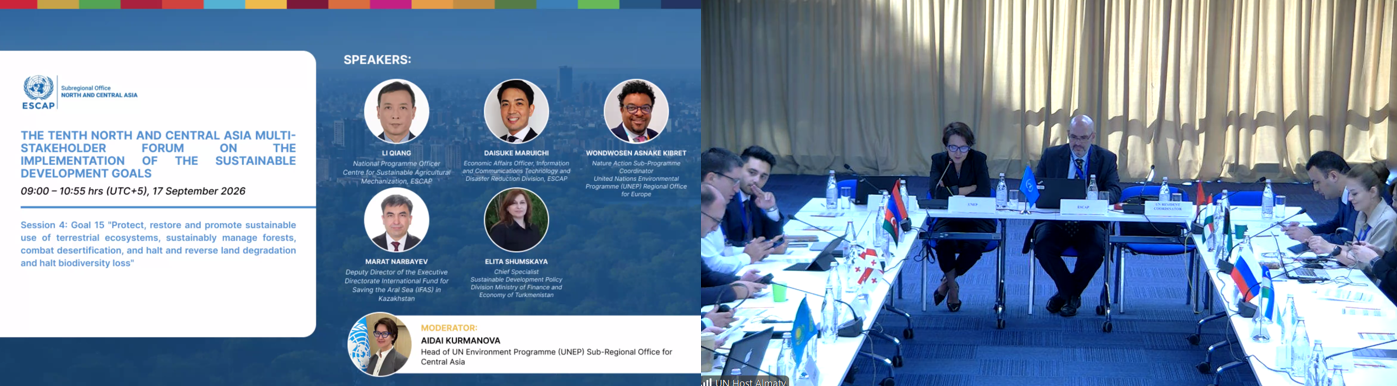
On 16–17 September 2026, the Centre for Sustainable Agricultural Mechanization (CSAM) of the United Nations Economic and Social Commission for Asia and the Pacific (ESCAP) participated in the Tenth North and Central Asia Multi-Stakeholder Forum on the Implementation of the Sustainable Development Goals, organized by the ESCAP Subregional Office for North and Central Asia in cpartnership with the Government of Kazakhstan, other UN agencies, international and regional organizations, and stakeholders from the private sector and civil society. The Forum brought together representatives of governments, United Nations entities, regional and international organizations, academia, civil society and other stakeholders to exchange experiences and discuss priorities for accelerating implementation of the 2030 Agenda in North and Central Asia.
At the session dedicated to SDG15, the CSAM shared its regional initiatives and practices in advancing SDG15: Life on Land, highlighting the role of sustainable agricultural mechanization in supporting sustainable land and water management, strengthening agricultural resilience and improving the livelihoods of smallholder farmers. CSAM’s regional initiatives featured at the session included those focusing on integrated straw management, conservation agriculture and climate-smart mechanization, with particular attention to promoting locally adapted mechanization solutions proving alternatives to crop residue burning and climate-smart solutions for dryland farming in the region through mechanization, capacity development and technology transfer.
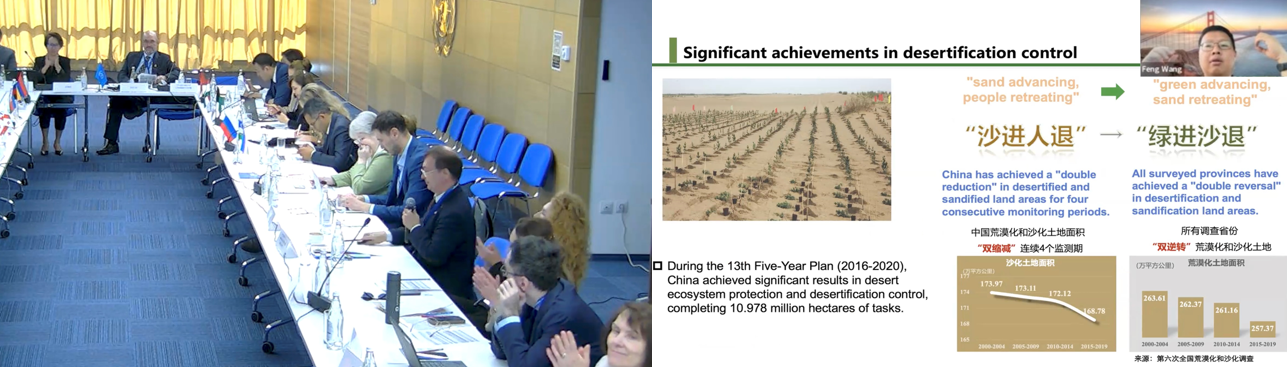
CSAM’s partners also shared their experience in addressing transboundary environmental challenges, land degradation, desertification, and sand and dust storms. The role of academia in linking research and education with technology adaptation, demonstration, training and regional cooperation was underscored as an important means of strengthening regional collaboration. China’s experience in combating desertification and restoring degraded land was also presented, highlighting the importance of long-term planning, science-based approaches and sustained implementation in advancing ecosystem restoration and ecological resilience, with relevant lessons for North and Central Asia.
Overall, the event highlighted the links between sustainable agricultural mechanization, research and extension, technological innovation and ecosystem restoration in advancing SDG15. Among the examples highlighted was CSAM’s Regional Initiative on Integrated Straw Management, which has established pilot sites in Cambodia, China, Indonesia, Lao PDR, Nepal, Thailand and Viet Nam to test locally adapted alternatives to crop residue burning. CSAM also highlighted its work on climate-smart mechanization for dryland farming, including workshops involving participants from Central Asian countries on digital technologies and water-efficient and smart irrigation systems. Discussions also pointed to opportunities for strengthened cooperation among universities, research institutions and other partners in knowledge exchange, technology adaptation and the wider application of sustainable solutions.