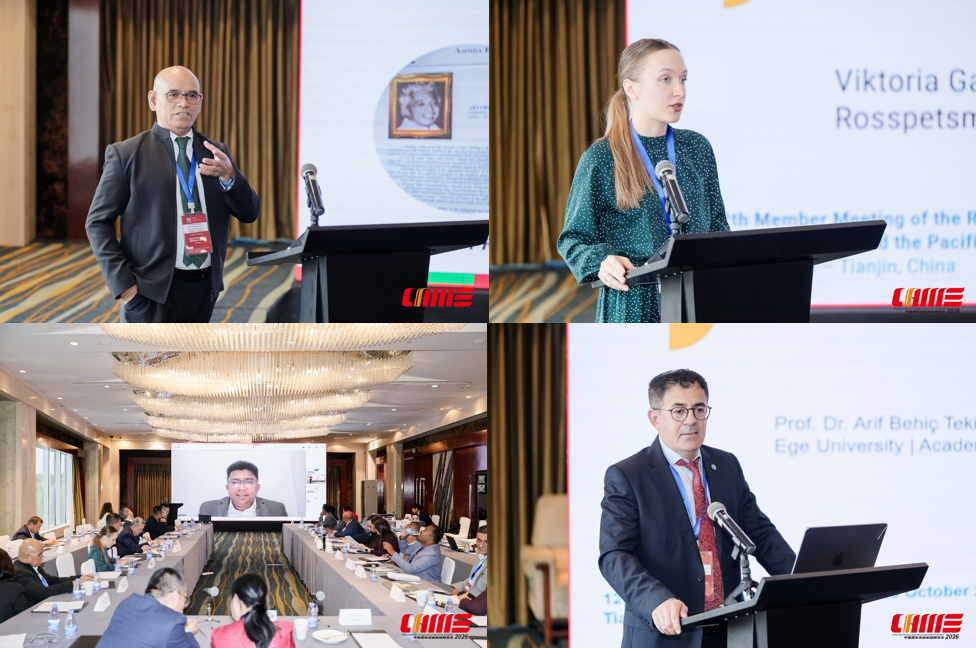
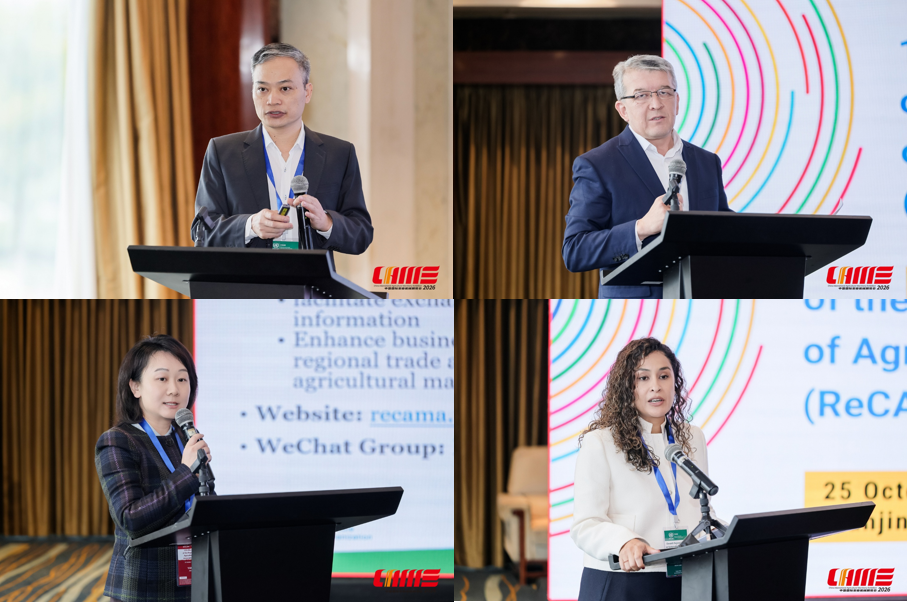
12th ReCAMA Member Meeting Strengthens Regional Cooperation on Sustainable Agricultural Mechanization and Welcomes Uzbekistan as New Member
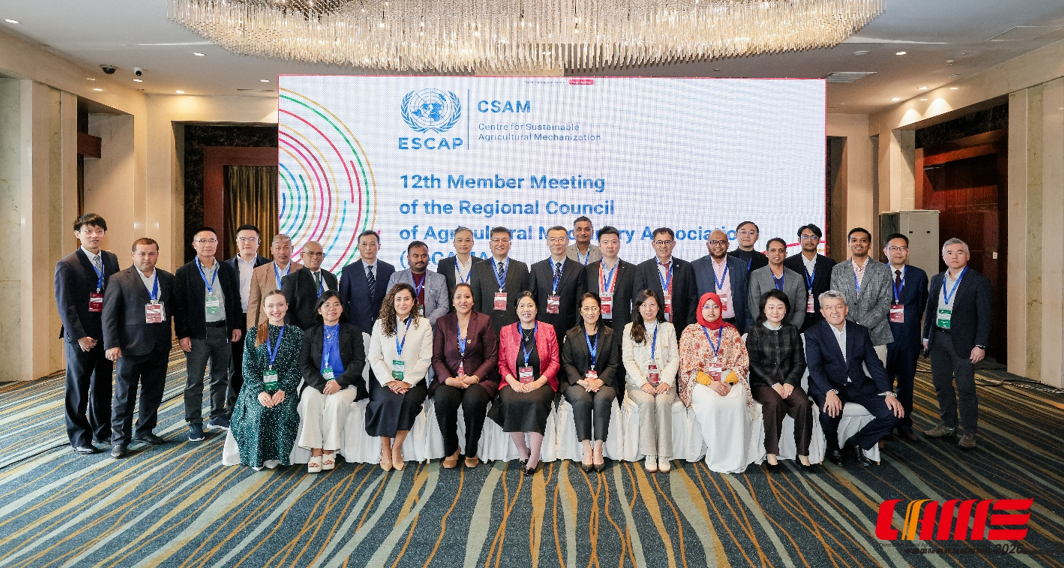
On 25 October 2026, the Centre for Sustainable Agricultural Mechanization (CSAM) of the United Nations Economic and Social Commission for Asia and the Pacific (ESCAP), organized the 12th Member Meeting of the Regional Council of Agricultural Machinery Associations in Asia and the Pacific (ReCAMA) in Tianjin, China. Held in conjunction with the 2026 China International Agricultural Machinery Exhibition (CIAME), the meeting was organized with the support of the China Agricultural Machinery Distribution Association (CAMDA), the China Agricultural Mechanization Association (CAMA), and the China Association of Agricultural Machinery Manufacturers (CAAMM).
This year’s Member Meeting brought together over 30 participants representing 16 associations from 14 countries, including representatives of associations of farmers and of agricultural machinery manufacturers and distributors, to exchange national experiences and guide the secretariat’s work for the coming year.
The meeting welcomed the Council of Farmers of Uzbekistan as ReCAMA’s twenty-second member, further strengthening the network’s representation and engagement in the Central Asian subregion. ReCAMA members also elected the Indian Agricultural Machinery Manufacturers Association (AMMA-India) as Chair and the Vietnam Society of Agricultural Engineering as Vice-Chair for the 2026–2027 term.
Under the theme “Fostering Innovation in Sustainable Agricultural Mechanization”, members shared recent developments, challenges and opportunities in translating technological advances into practical solutions, particularly through the integration of emerging technologies into straw and crop residue management, conservation agriculture and climate-smart mechanization.
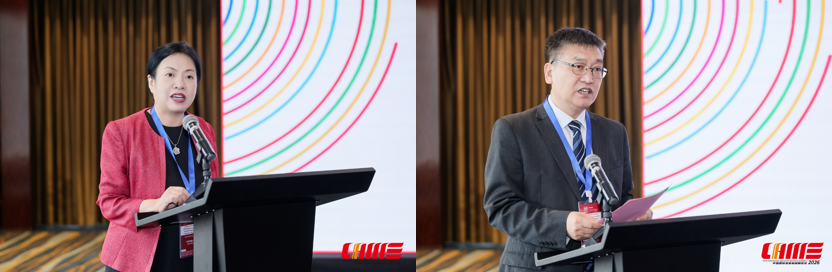
In her opening remarks, Dr. Yutong Li, Head of ESCAP-CSAM, highlighted the importance of adapting and applying emerging technologies, innovative practices and business models to diverse agricultural contexts across the region. The discussions further underscored the need to enhance the affordability and accessibility of agricultural machinery, strengthen digital skills and promote innovative machinery service models to ensure that farmers can effectively benefit from technological advancements.
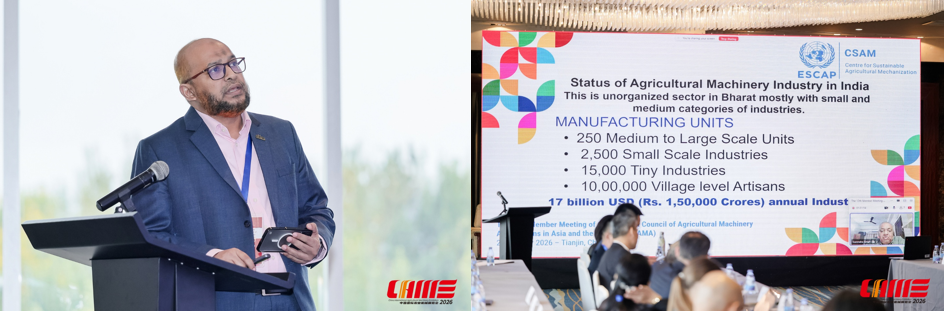
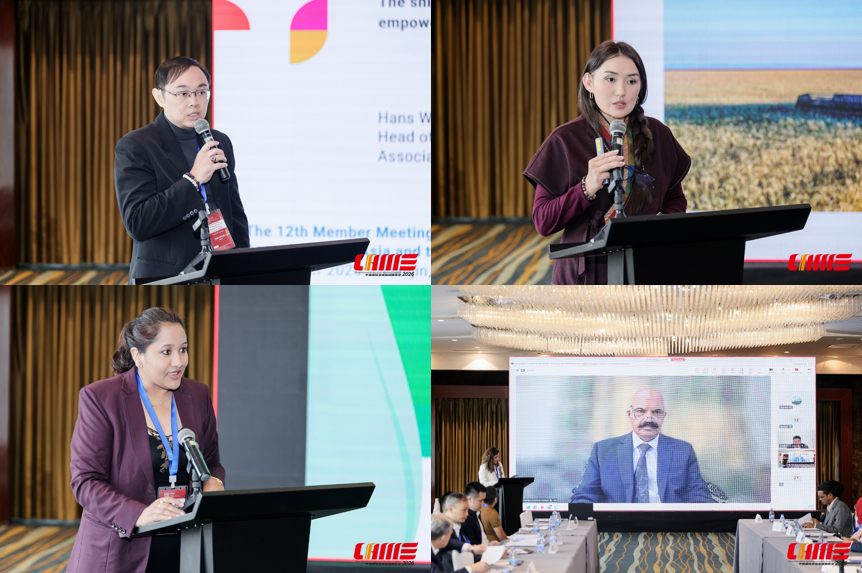
The Meeting reviewed ReCAMA’s 2026 Work Report and discussed the 2027 Work Plan. The discussions connected national priorities with opportunities for regional knowledge sharing, capacity development and collaboration, strengthening the Council’s role in supporting the members to address common challenges in sustainable agricultural mechanization.
Representatives also participated in the 11th Regional Forum on Sustainable Agricultural Mechanization in Asia and the Pacific held back-to-back with CIAME.
The event reaffirmed the significance of regional dialogue among associations, government, academia, and the private sector to foster innovation in response to the needs of rural communities. Through continued cooperation and the exchange of practical experience, ReCAMA will support its members to advance more accessible, inclusive and sustainable agricultural mechanization across the Asia-Pacific region.